Selected Works
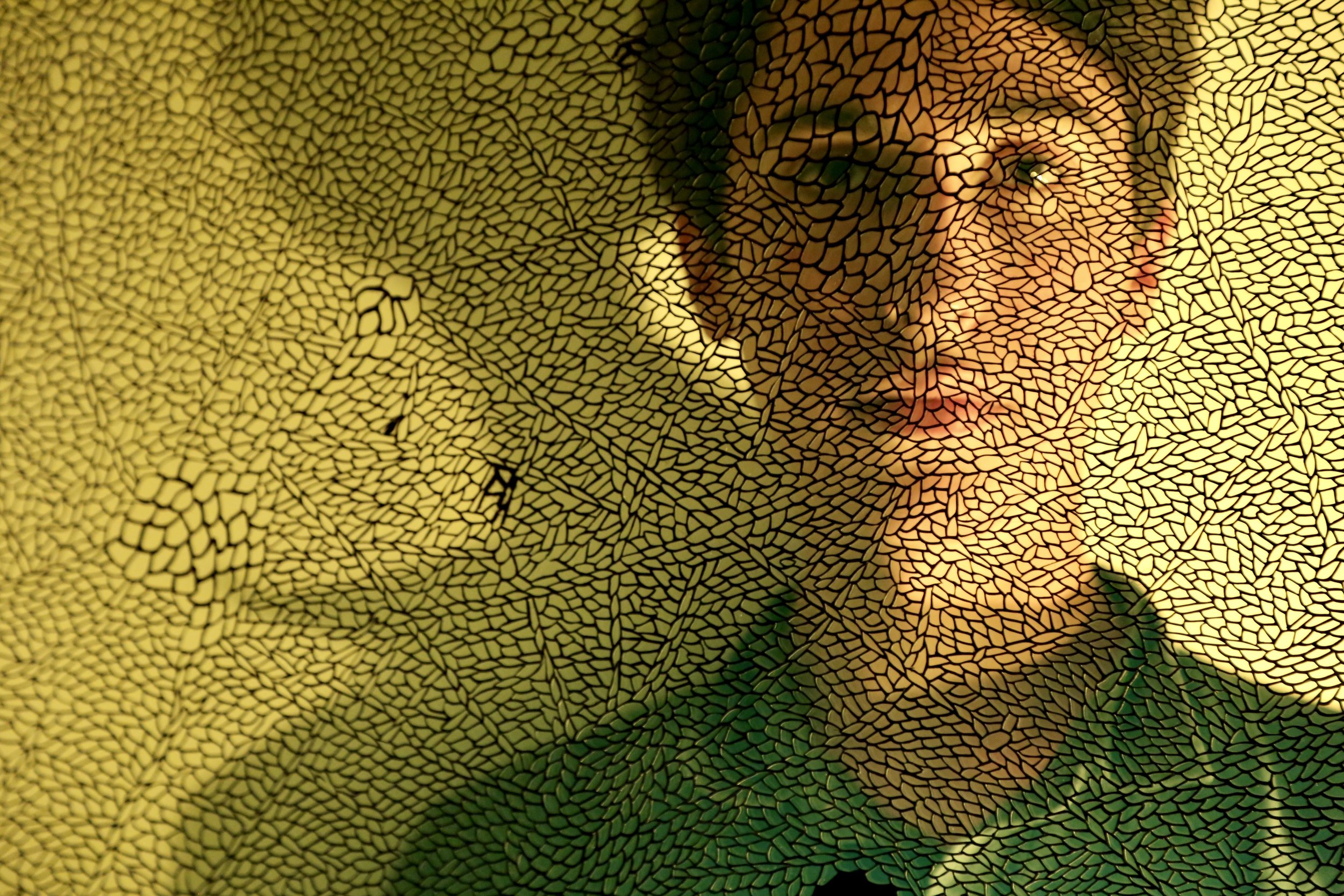
Please see my selected works below. I have included four different pieces that share the diversity of my practice and recent work I am particularly proud of.
A Fragile Collapse
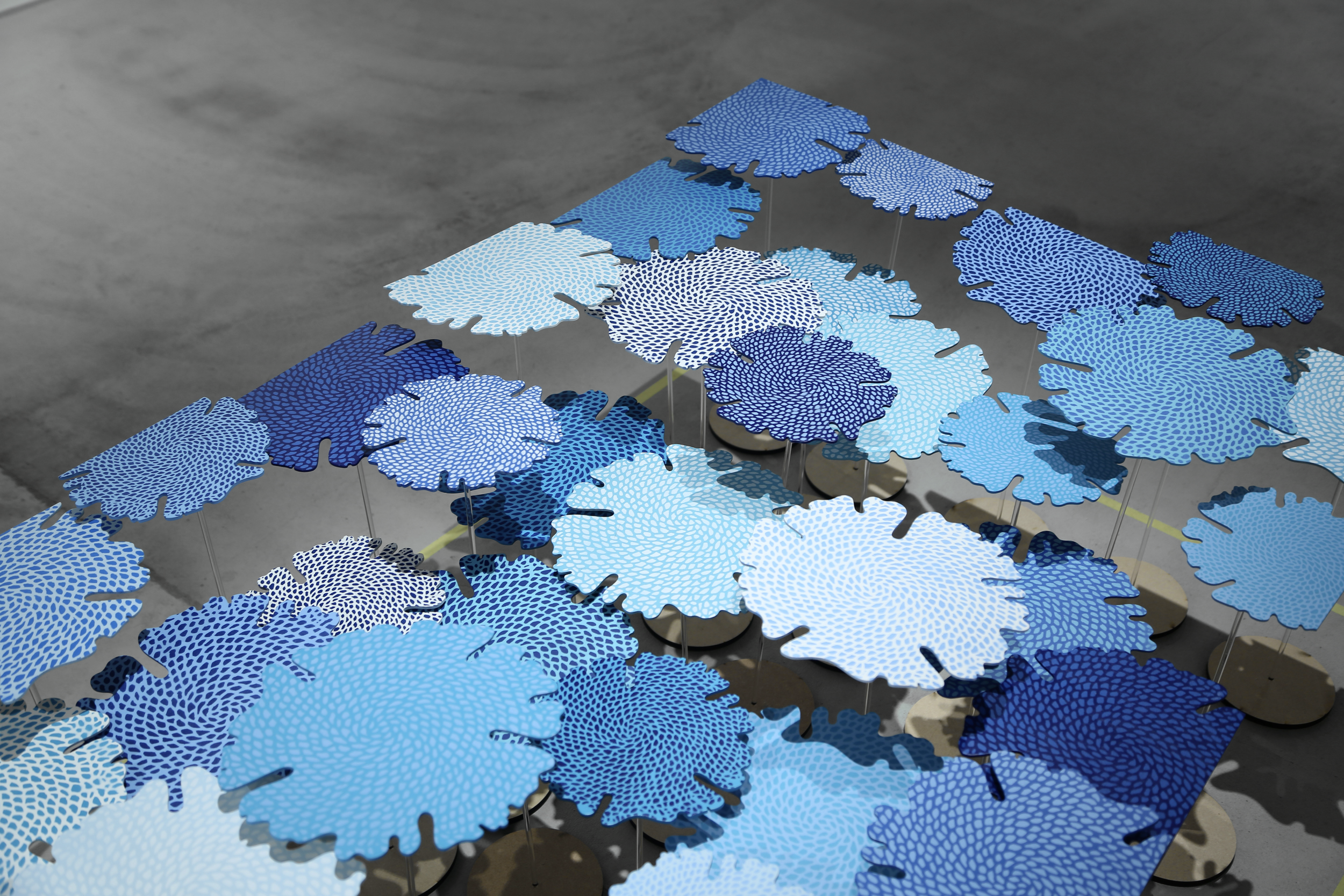
A Fragile Collapse examines the displacement of marine ecosystems in response to rising ocean temperatures, exploring the relationship between ecological adaptation, environmental instability, and the fragility of natural systems.
The installation was inspired by an article in The Asahi Shimbun, shared with me by my university professor, documenting the northward migration of southern coral species, including Acropora squarrosa, towards Tokyo Bay. Driven by rising sea temperatures and shifts in the warm Kuroshio Current, this geographical movement reflects the reorganisation of marine ecosystems under climate change.
The installation comprises 88 individually hand-painted wooden forms, their intricate surfaces created using stencils derived from my hand-cut paper works to reflect the structural complexity of coral. Elevated on slender clear acrylic supports, the forms create a fragmented marine landscape, with variations in height, density, and colour suggesting an ecosystem undergoing transformation.
Rather than presenting coral migration as evidence of ecological recovery, I examine the ambiguity of adaptation within an increasingly unstable environment. A Fragile Collapse considers how the emergence of life in new territories may simultaneously signal the deterioration of the conditions that once sustained it.
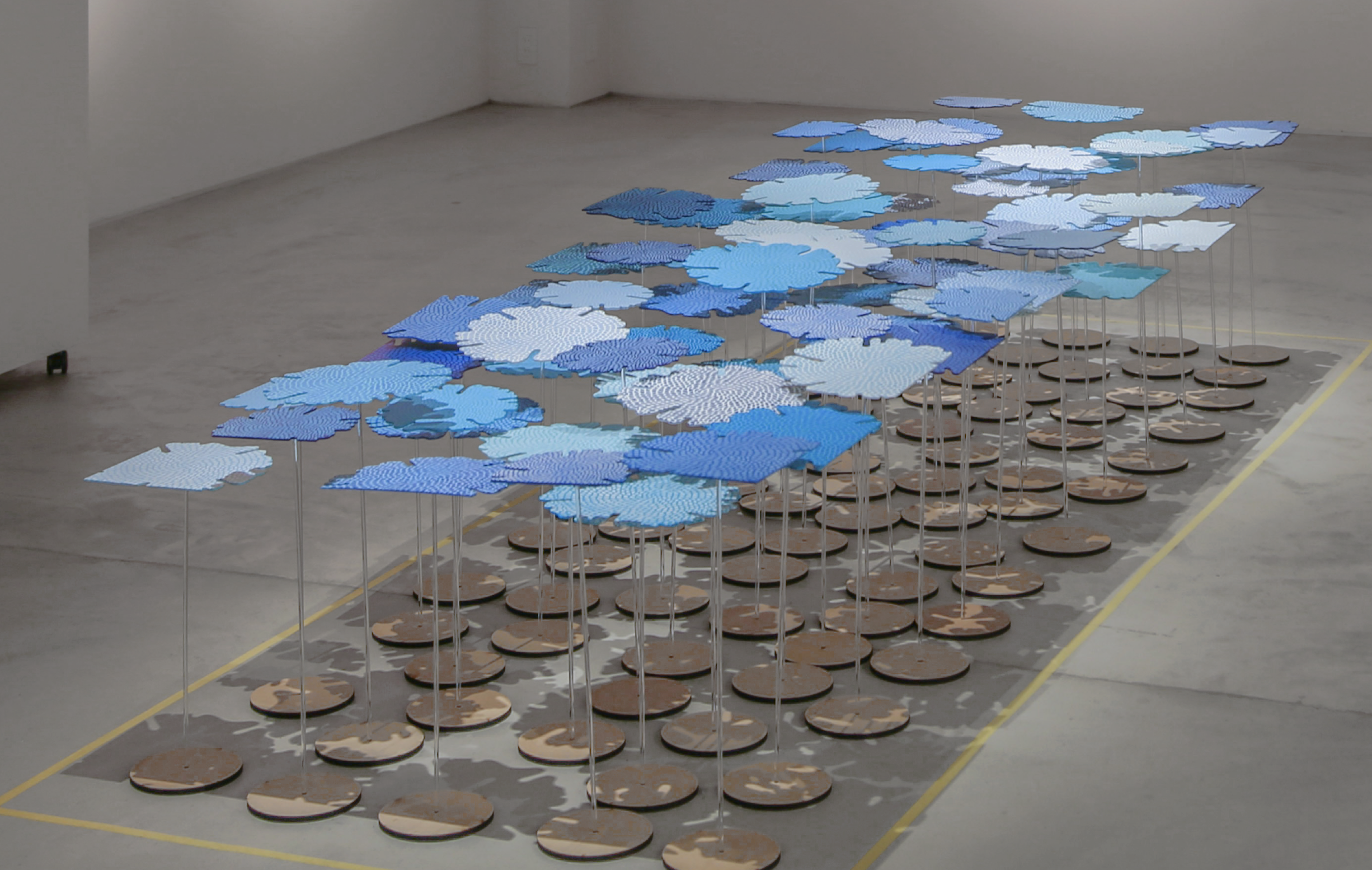
A Fragile Collapse, installation level view
A Fragile Collapse, wooden floor installation with hand-cut paper designs and acrylic paint, 300 × 100 cm
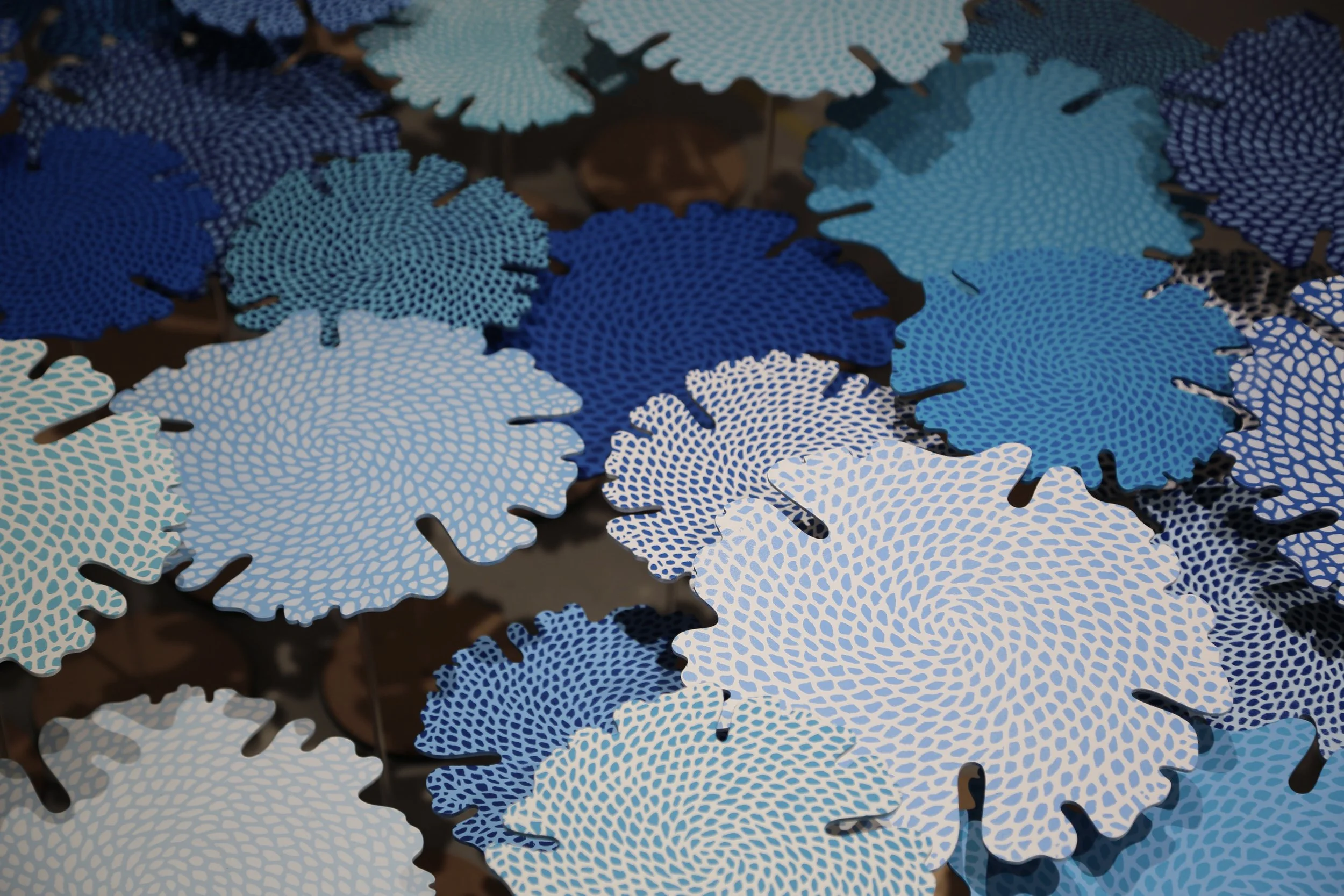
A Fragile Collapse, detail close-up
The End of the Line in Blue
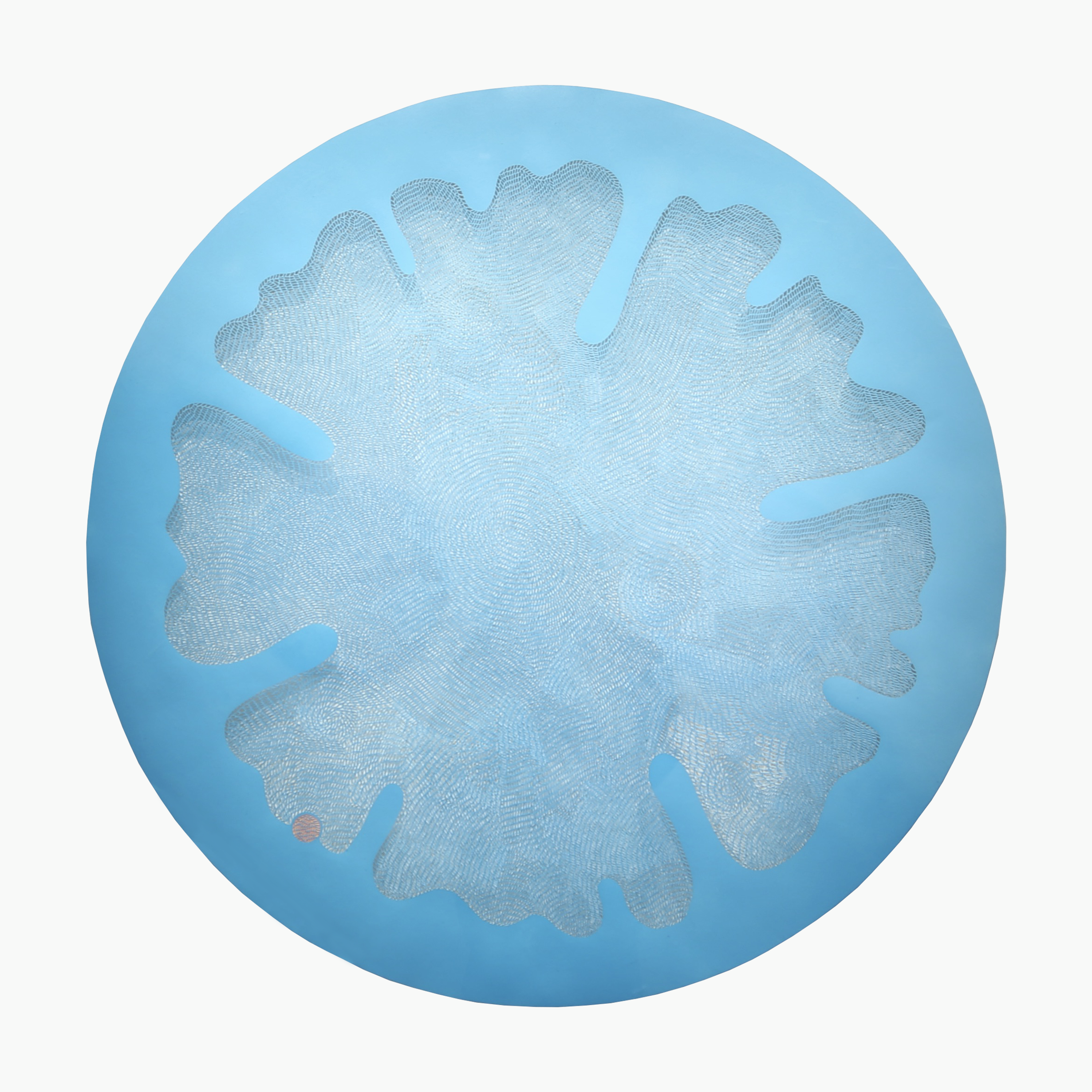
The End of the Line in Blue, hand-cut single sheet of paper suspended in clear acrylic sheets and painted with acrylic, 100 × 100 cm
The End of the Line in Blue explores the fragility of marine ecosystems, examining the relationship between organic growth, interdependence and environmental change.
Informed by my studies and sketches of the pink sea fan (Eunicella verrucosa), a soft coral native to British waters, the work considers how complex natural systems emerge through delicate networks of interconnected structures. I was particularly drawn to the coral's intricate formations, in which structural complexity exists alongside an inherent vulnerability to changing environmental conditions.
Through tens of thousands of individual cuts into a single sheet of paper, I sought to capture the fluidity and dynamism of these organic systems. The composition suggests continuous growth and transformation, while the delicate connections between its elements reflect the precarious balance upon which marine ecosystems depend.
The work extends beyond its physical surface through its interaction with the surrounding environment. Housed within a clear acrylic box frame, shifting light produces shadows that evolve throughout the day, allowing the composition to change in response to external conditions. This transience reflects the constant processes of adaptation and transformation within the natural world.
Ultimately, The End of the Line in Blue considers the tension between resilience and vulnerability, questioning how ecosystems defined by their capacity for growth and adaptation respond to increasingly unstable environmental conditions.
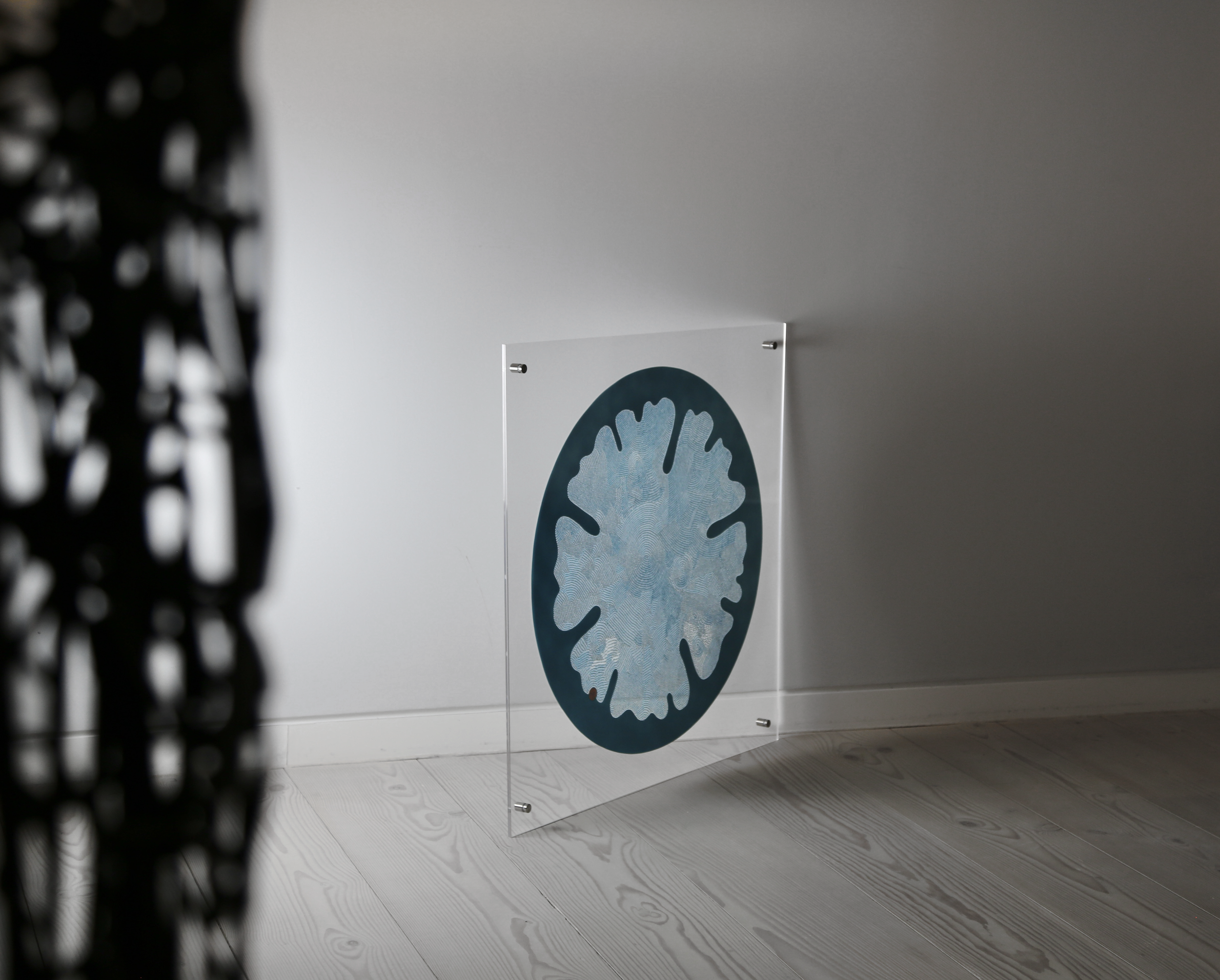
The End of the Line in Blue, ¾ side view and back-lit
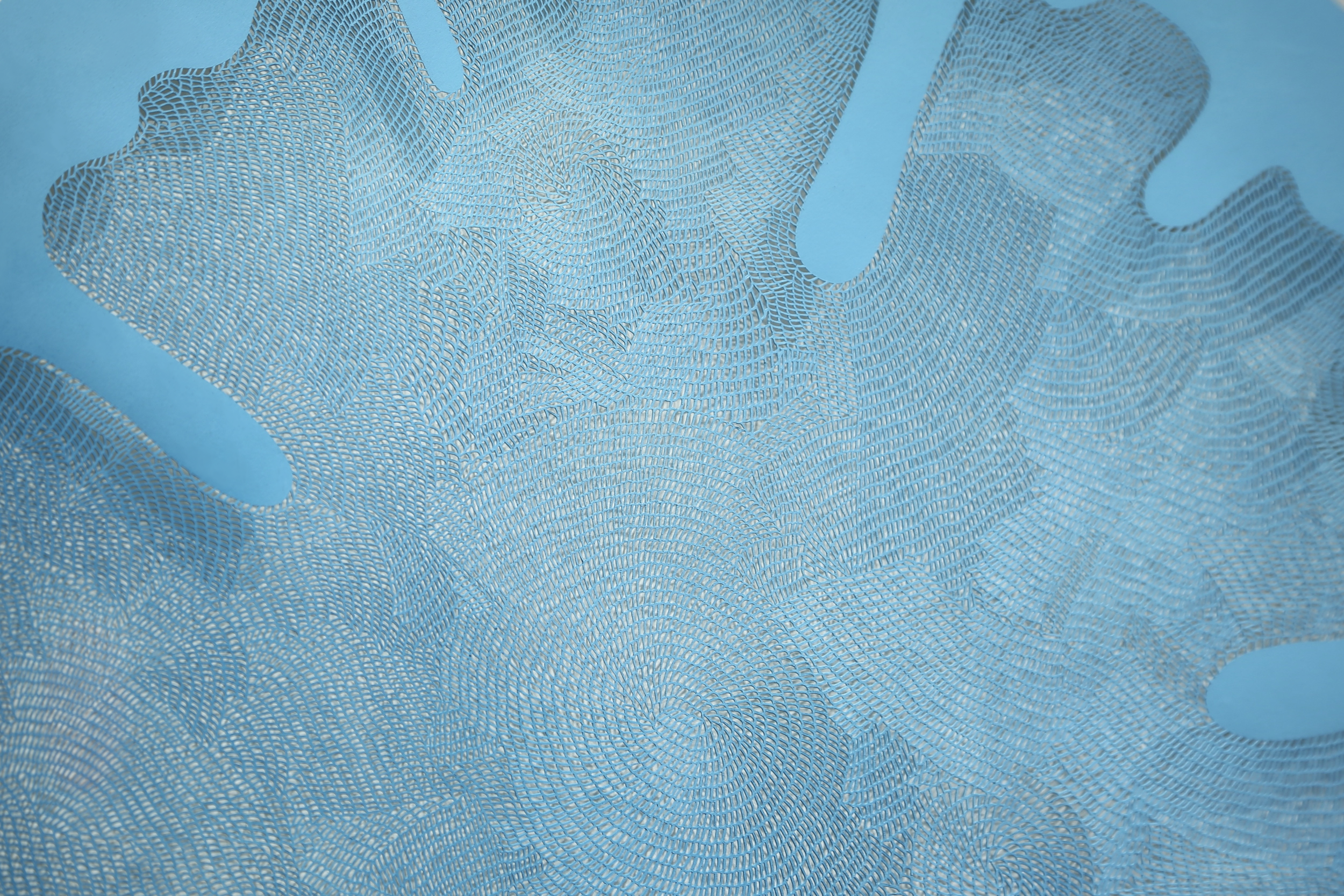
The End of the Line in Blue, hand-cut paper detail close-up
Thousand Intersections
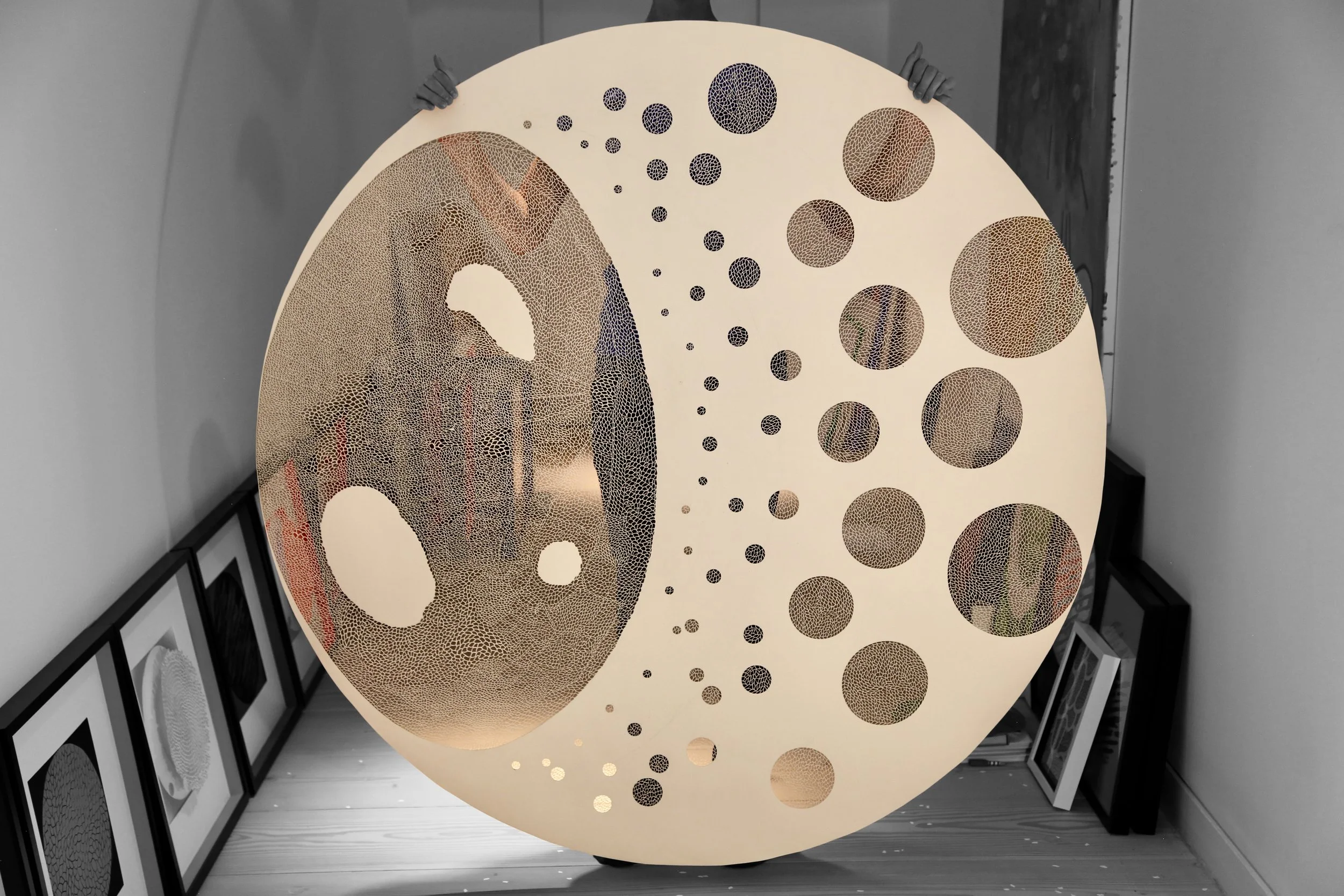
Thousand Intersections, hand-cut single sheet of paper, 180 cm diameter circle
Thousand Intersections is my largest and most time-intensive work, developed over two years through more than 20,000 individual cuts into a single sheet of paper.
Drawing on my research into coral bleaching, the work explores the delicate relationships that sustain complex natural systems. Coral reefs exist through networks of interdependence, where the survival of individual organisms is inseparable from the health of the wider ecosystem. I was interested in how these systems can appear extraordinarily intricate and resilient, yet remain vulnerable to changes that extend far beyond any single element.
Through the removal of material, I began constructing a network in which every form depends upon the structures surrounding it. Each cut creates space while altering the connections that hold the paper together. The resulting composition exists in a delicate balance between connection and separation, growth and collapse. In this way, the process itself becomes a reflection of the systems I was studying.
I worked on the piece throughout my university years, returning to it each night after classes and allowing my research and experiences to inform its development. Over two years, the composition gradually became a visual diary of that period of my life, an intricate tapestry of decisions and moments held together within a single sheet.
Thousand Intersections considers how the identity of any complex system emerges through the relationships between its individual parts. It is both a reflection on the fragility of marine ecosystems and a personal record of time, where thousands of individual actions become inseparable from the whole.
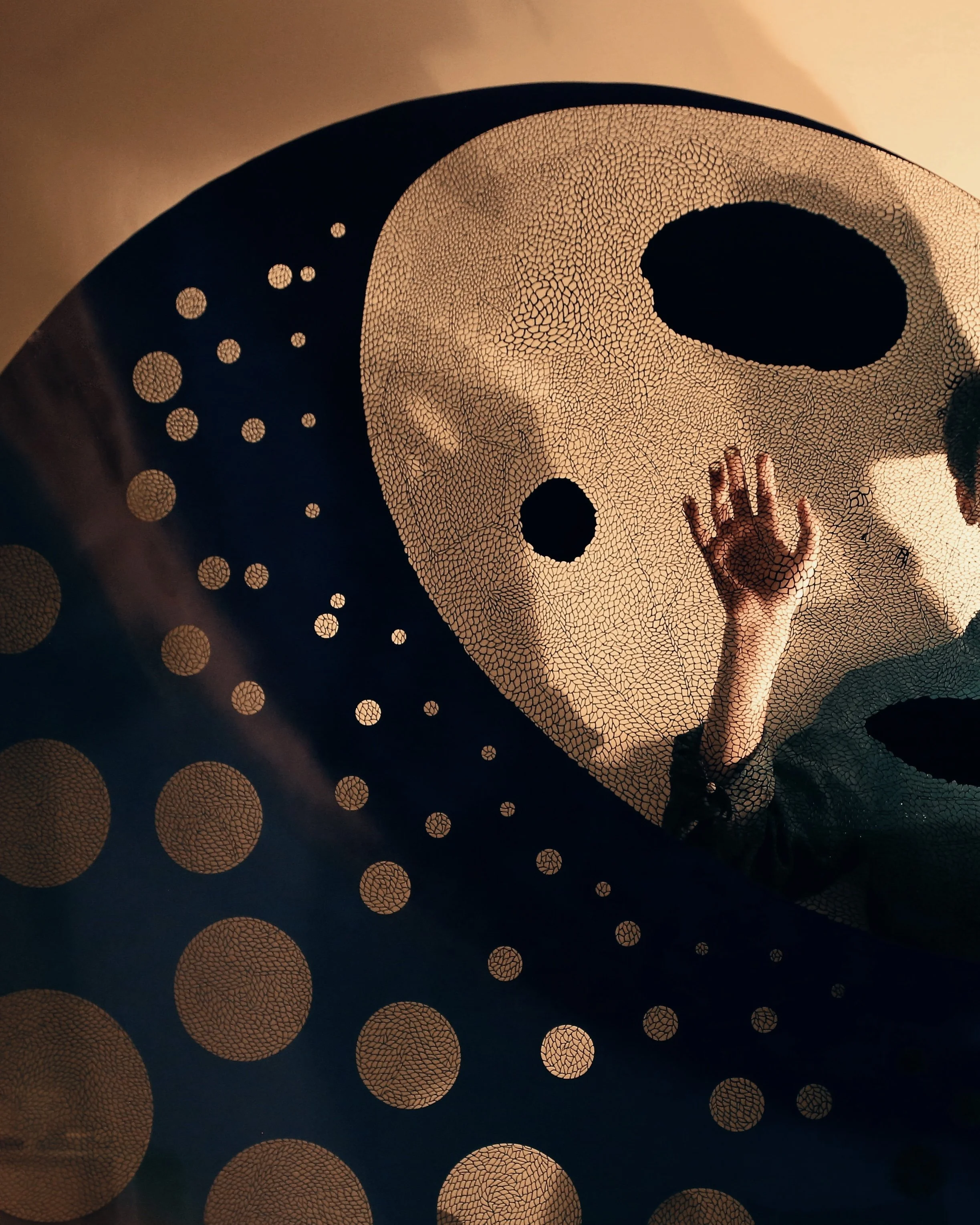
Thousand Intersections, back-lit with artist’s hand behind acrylic background
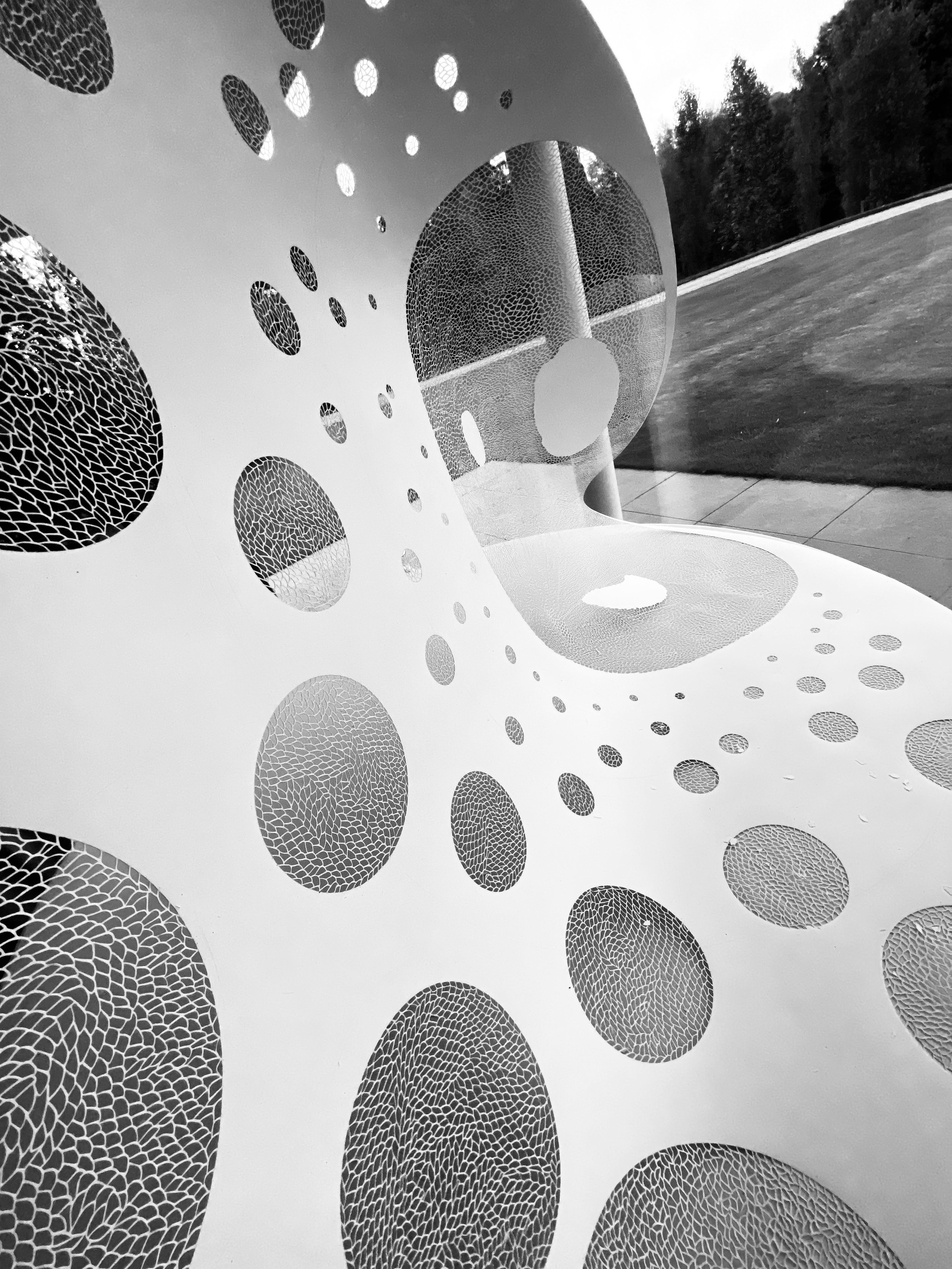
Thousand Intersections, held-up to create sculptural forms
Ginza Rush Hour Blue Dot
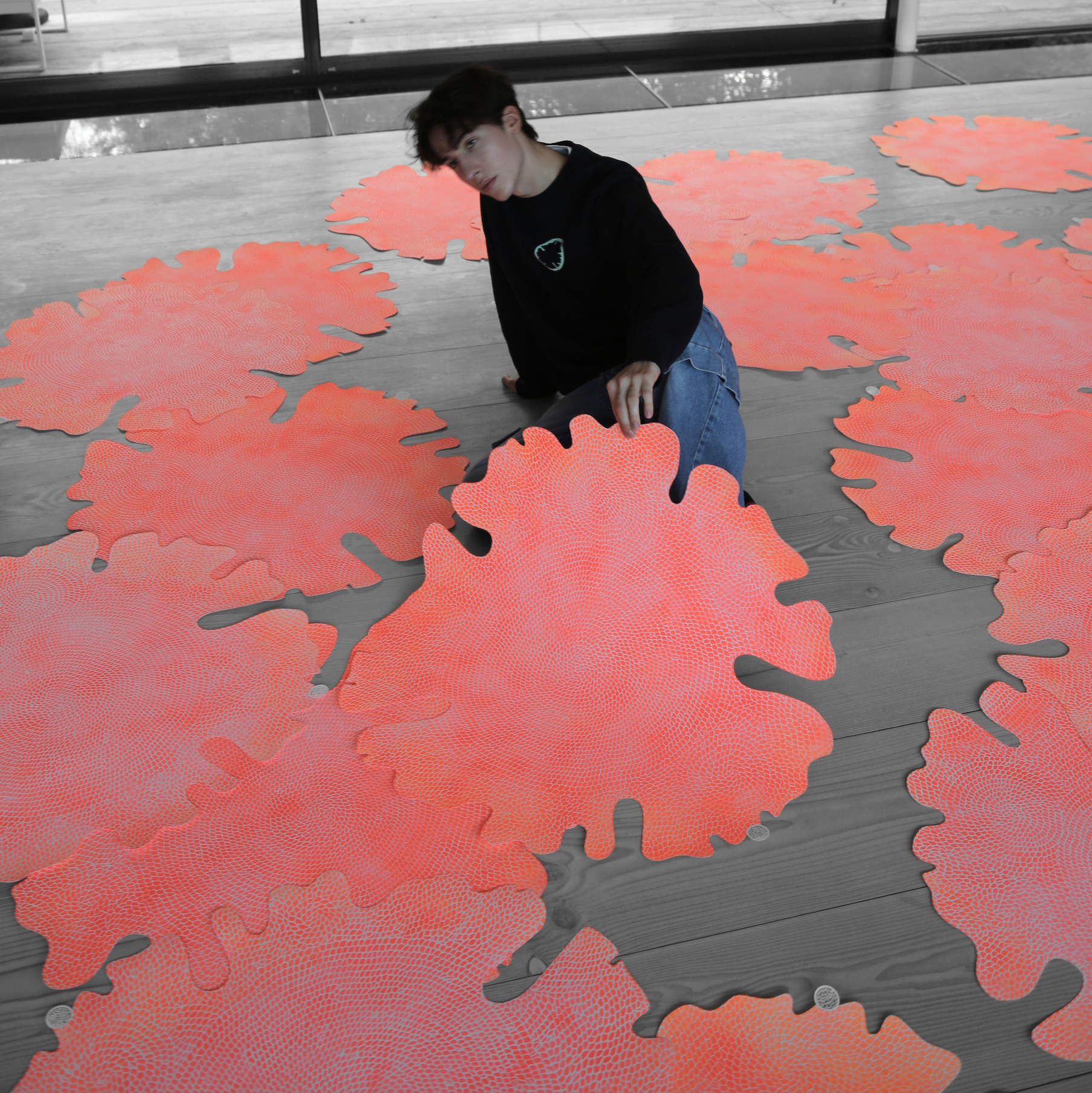
Ginza Rush Hour Blue Dot, 75 hand-cut sheets of paper painted with acrylic paint and created as an organic floor installation positioned by the artist, each sheet is 80 cm diameter
Ginza Rush Hour Blue Dot is an organic floor installation consisting of 75 individually painted pieces, exploring the relationships between ecological systems, interconnectivity and environmental change.
The work draws inspiration from the fluorescent colours of certain coral species, such as Acropora yongei, which can exhibit vivid green fluorescence under blue light. These striking colours reveal the complex biological processes through which corals interact with their surrounding environment.
Each piece is created using my original hand-cut paper compositions as stencils, translating the negative spaces of the cut paper into painted forms. Through this process, what was originally removed becomes the foundation for something new, reversing the relationship between presence and absence.
The 75 elements are individually positioned by hand, forming an interconnected arrangement that responds to the surrounding space. Although each piece exists independently, their relationships create a larger organic structure, reflecting how coral ecosystems emerge through networks of individual organisms.
The installation explores how complex systems take shape through the relationships between their constituent parts, while remaining open to transformation and change.