About
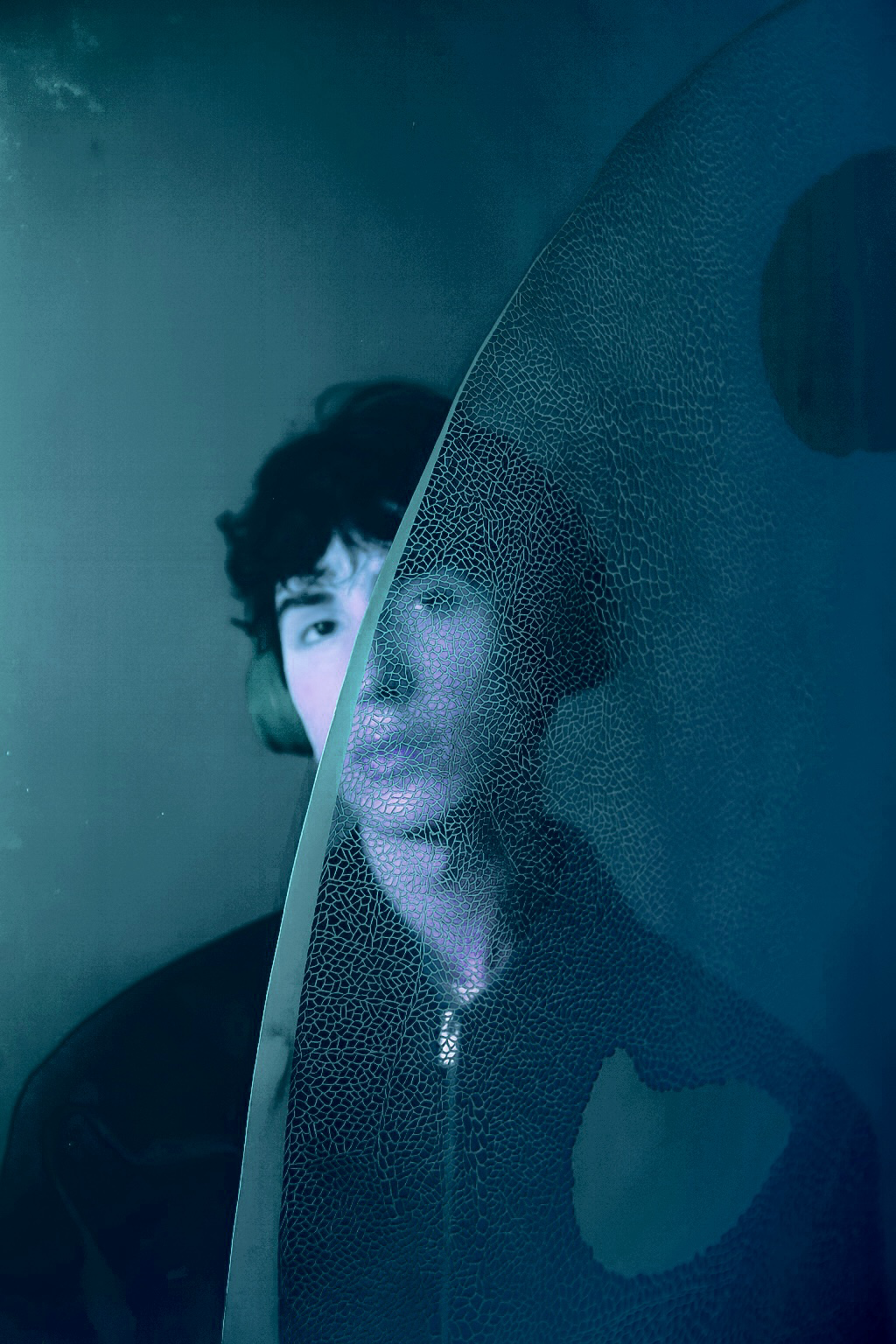
JR CHUO (b. 2002) is a British-Portuguese multidisciplinary artist based in London. Working primarily through the intricate process of hand-cutting paper, his practice explores ecological fragility, interconnected systems and the relationship between natural and built environments. Drawing on coral reef ecosystems, architectural structures and metropolitan networks, CHUO develops complex compositions through the interplay of positive and negative space.
In 2025, CHUO presented two solo exhibitions, 100 Thousand Cuts of the Knife (London) and System of Escape (Tokyo). His work has been exhibited internationally and is held in private collections across Europe, North America and Asia.
CHUO graduated from the University of Cambridge in 2024 with a degree in Asian and Middle Eastern Studies and was a Japanese Government (MEXT) Scholar at Keio University, Tokyo, where he researched the role of public art in post-tsunami regeneration in northeastern Japan. He was named to the Forbes 30 Under 30 Europe list in Art & Culture in 2022.
Statement
My practice investigates the relationships through which complex systems emerge, remain interconnected and become vulnerable to change. Drawing on ecological structures and urban infrastructure, I explore the underlying networks that shape both natural and built environments, from coral reef ecosystems to architectural grids and metropolitan networks.
Working primarily through hand-cutting paper, I approach the removal of material as an act of construction. Through tens of thousands of individual incisions, intricate compositions emerge from a single sheet, with negative space becoming an essential structural element. Each cut establishes new relationships between the remaining forms while simultaneously reducing the material that holds them together.
The physical properties of paper are central to this investigation. Its inherent fragility and limited structural strength create a tension between the complexity of the compositions and the vulnerability of the material supporting them. This relationship reflects the interdependence of wider systems, where the alteration or loss of individual elements can affect the stability of the whole.
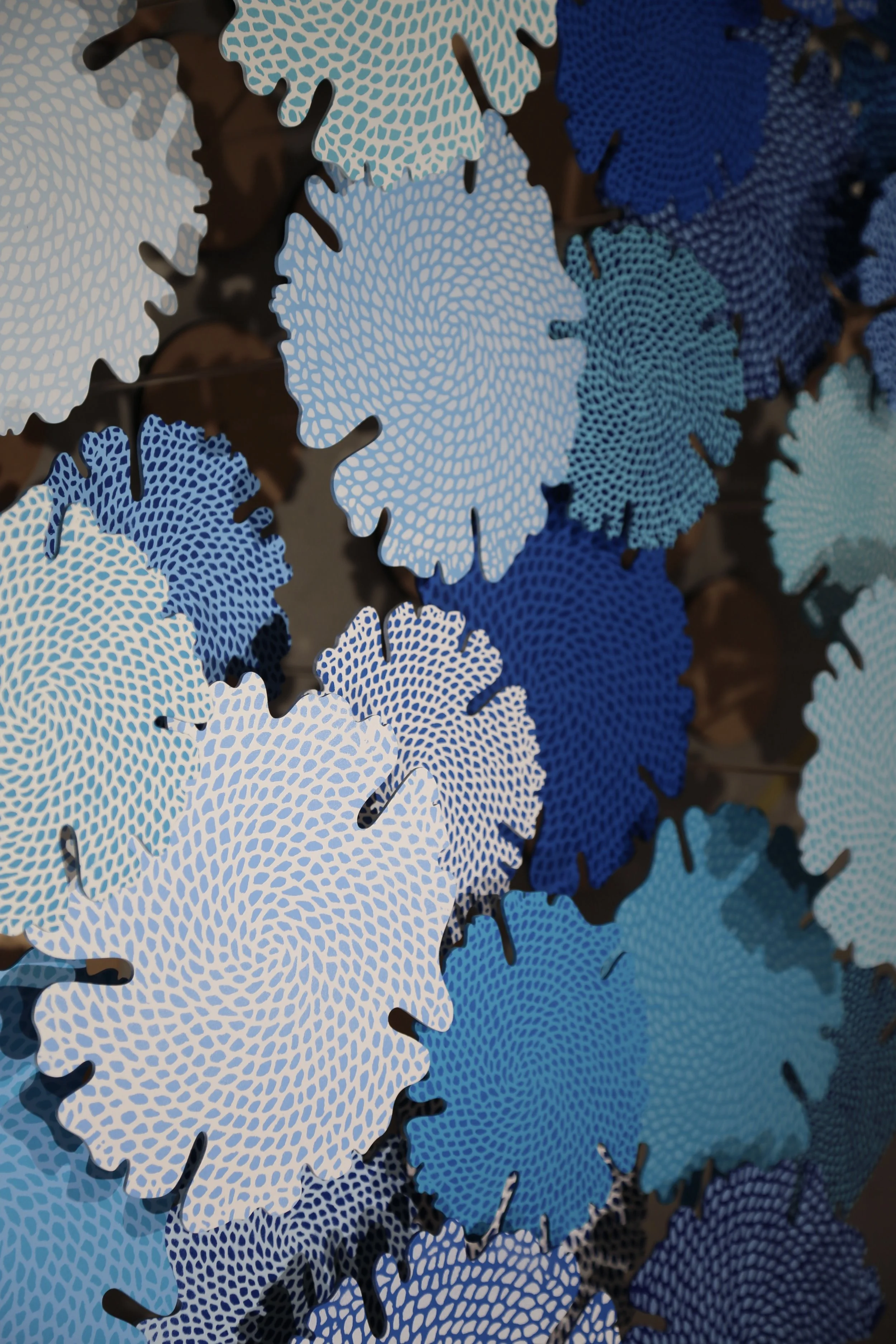
My recent work has increasingly examined the fragility of marine ecosystems, particularly the effects of climate change and coral bleaching. I am interested in the intricate structures through which coral ecosystems develop and sustain themselves, and how their complexity exists alongside an extraordinary vulnerability to environmental change. These relationships inform both the visual language and physical construction of my work.
Time is also integral to my practice, not simply as the duration required to produce each piece, but as something embedded within the work itself. Each incision represents an irreversible decision, permanently altering the structure of the original sheet. The gradual accumulation of these decisions becomes a record of time, where construction and removal are inseparable. Over the years, I have developed distinct cutting styles informed by different periods of my research and artistic exploration. Looking back at earlier works, I can often trace particular patterns and techniques to specific periods in my life, recognising how the subjects I was researching at the time shaped my visual language. In this sense, the work becomes both a physical record of time spent and a reflection of my evolving interests and experiences.
Informed by the Japanese stencil-cutting tradition of Ise katagami, within the broader cross-cultural history of paper cutting, I have developed my own technique, focused on heavyweight paper and the tensions created by loss of structure, over many years. While hand-cut paper remains central to my practice, I also extend these investigations into painting, sculpture and installation, exploring how relationships between form, absence, material and space can be articulated across different mediums.